Survivors Born in The Constant

Characters

These six survivors debuted in Don't Starve Together itself. Each rewrites the survival rules in their own way — an engineer, a soul-stealing imp, a merm, a scout, a clockmaker, and a curse.

Picking a Survivor

The best Don't Starve Together characters — and where to start

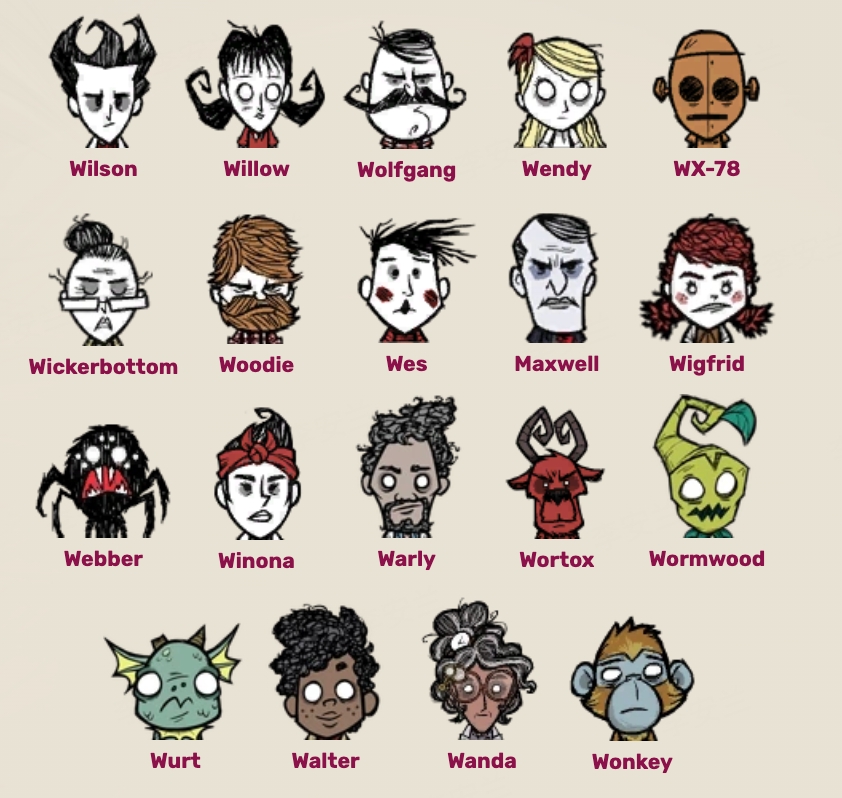
The six survivors profiled here debuted in Don't Starve Together. The full playable roster is larger, though, because it also includes the returning cast from the original game — Wilson, Willow, Wendy, WX-78 and the rest — so when players argue about the best Don't Starve Together character, they're choosing from everyone, old and new.

For your very first world, the best character for beginners is usually Wendy or Wilson. Wendy in Don't Starve Together is famously forgiving: her ghostly sister Abigail fights enemies for her, so survival is much gentler while you learn. Wilson is the plain, no-downside baseline.

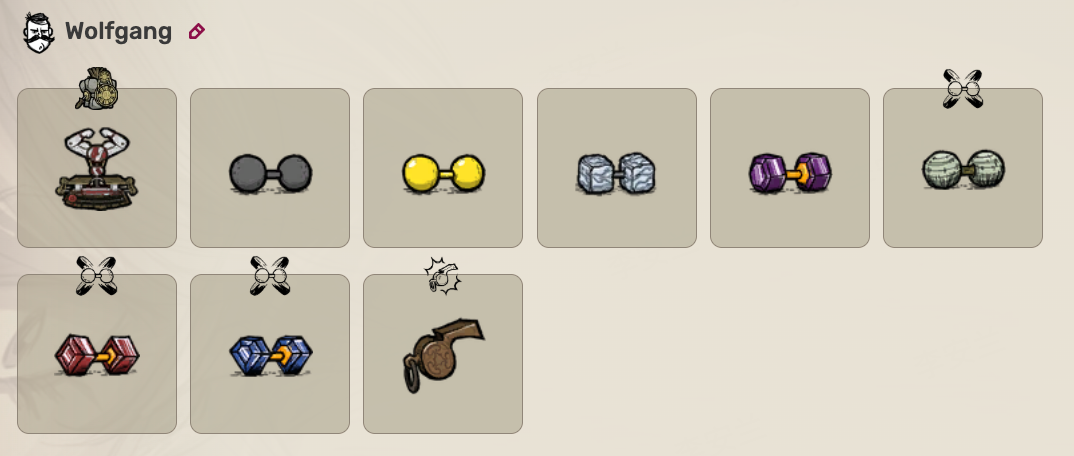
Once you know the ropes, the strongest survivors lean on standout perks — Wanda's time-bending pocket watches and a heavy hitter like Wolfgang are perennial picks for veterans, while support survivors keep a whole team alive. There is no single best character; the right one depends on whether you're soloing, supporting, or leading a raid.

The six DST-original survivors are below. Pick a tab to read each one's perks, downsides and playstyle.

The Handywoman

Winona

Winona is a tough, fast-working former factory hand who was pulled into The Constant while chasing the one thing she has never been able to let go of: her missing younger sister. She turns raw determination into machinery, and is the engineering backbone of almost any team lucky enough to have her.

Who Winona is

Winona was the very first survivor created specifically for Don't Starve Together, and she still defines what a "support builder" looks like in the game. Where most survivors fight or forage, Winona constructs: she raises bases faster than anyone, patches up gear that would otherwise be thrown away, and plants automated war machines that can hold a position while the rest of the team does the dangerous work.

She is loud, practical and a little impatient — a working-class character in a cast full of scientists, wizards and aristocrats. That grounded personality is the point. Winona treats the nightmare world like a job site that simply needs the right tools, and that attitude makes her one of the most approachable survivors for newer players while still rewarding experienced ones who learn to wire her gadgets together.

Origin: the search for Charlie

Before the darkness, Winona worked the assembly line at the Voxola PF radio factory. She is characterised as a no-nonsense grafter who despises laziness, and her whole story is built around family loyalty: her younger sister is none other than Charlie, the shadowy queen who now rules The Constant from the throne once held by Maxwell.

When Charlie vanished, Winona refused to accept it. For years she chased every lead until the trail brought her to a strange factory and a secretive old man — and to a malfunctioning portal. Catching sight of someone being dragged through it, Winona repaired the machine and stepped through in a desperate rescue attempt, only to come face to face with her lost sister, now bound to a shadowy influence. Charlie pulled her the rest of the way into the Constant.

Her backstory is told in the animated short "Next of Kin". It reframes everything about her: every base she builds and every machine she repairs is, in a sense, still part of a one-woman search party. That makes ruling-queen Charlie a deeply personal backdrop to Winona's survival rather than just another boss on the map.

Her core perk: a faster pair of hands

Winona's defining baseline ability is raw speed. She builds and works noticeably faster than a standard survivor, which sounds small until you watch her throw up an entire base, a wall line, or a field of farm plots in a fraction of the usual time. In a co-op game where the early days are a race against the first winter, having someone who can prototype and place structures quickly is a genuine force multiplier for the whole server.

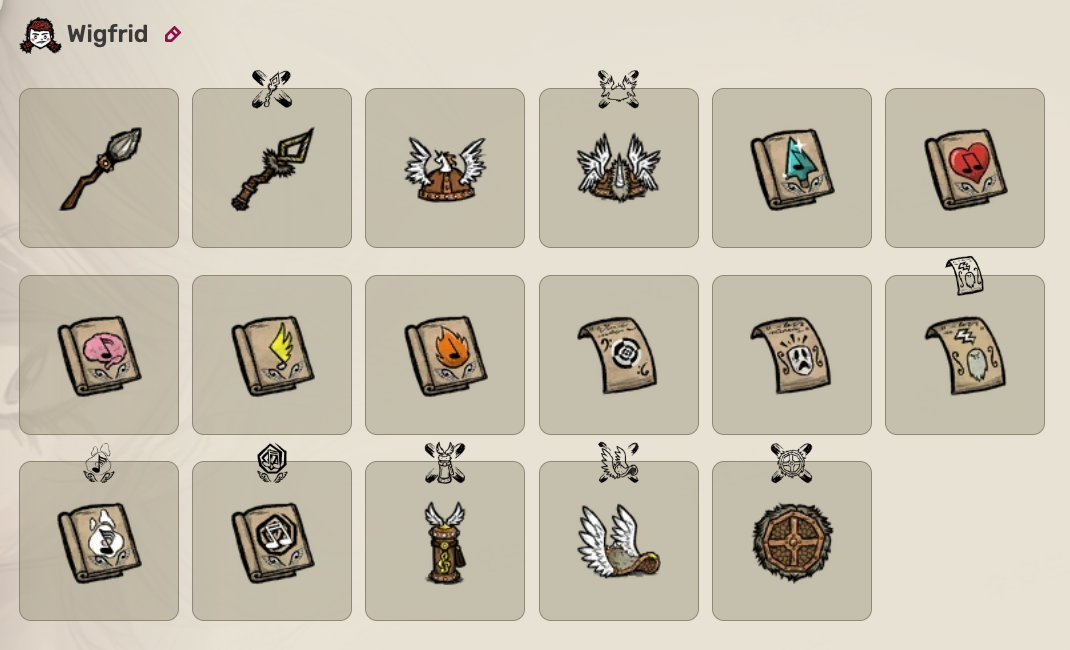
That speed also extends to her repair work. Winona can craft Sewing Tape (often called Trusty Tape), a cheap repair item that patches up tools, weapons and armour, letting the team squeeze far more life out of expensive gear instead of constantly rebuilding it.

The Engineering tab: generators and gadgets

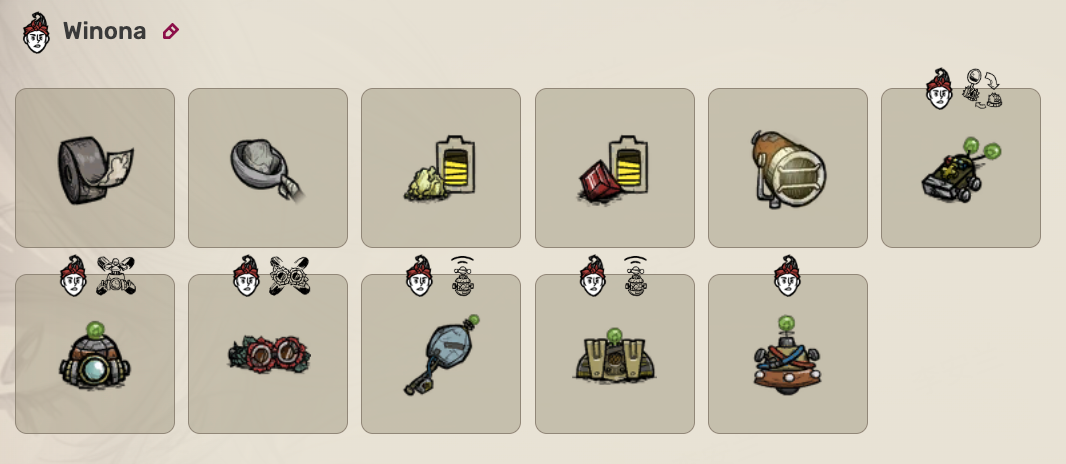
Winona's real identity lives in her exclusive Engineering crafting tab, a set of powered structures that no other survivor can build. The system has two halves: power sources and the machines they feed.

Her power comes from generators. Winona's Generator runs on fuel you feed it, while the upgraded G.E.M.erator runs on gems and projects a much larger, more reliable power field. Any of her powered devices placed inside that field will switch on; step outside the field and they go dormant. Managing the radius and fuel of her generators is the heart of playing Winona well.

Think in circuits: a generator is useless on its own and a catapult is useless without power. Winona players plan a base as a grid — generator in the middle, machines arranged inside its glow — rather than scattering structures at random.

Winona's Catapults

The catapult is Winona's signature weapon and the reason teams beg her to set up before a big fight. Once powered, a Winona Catapult automatically targets and hurls rocks at nearby enemies with no input from the player. A single catapult is a nuisance; a ring of six or eight of them, all powered by one generator, becomes a static kill-zone that can grind down raid bosses, hound waves and seasonal giants while the survivors simply kite the target into range.

Because the catapults do the damage, Winona effectively lets a team punch far above its weight in combat. Many late-game boss strategies are designed entirely around luring the boss into a pre-built catapult arena. The trade-off is setup: catapults cost resources and need a powered, defended position, so they reward planning rather than improvisation.

Spotlights, tape and quality of life

Winona's other powered device is the Spotlight, which tracks and illuminates a chosen survivor. In a game where darkness is lethal, a spotlight that follows you around a base is both a safety net and a huge convenience, freeing the team from carrying torches during night-time chores.

Layered on top of the flashy machinery is all her quiet utility: fast building, fast repairs with Sewing Tape, and a skill tree that lets a player lean further into either her engineering devices or her general handywoman efficiency. None of it is glamorous, but it is exactly the kind of infrastructure that keeps a hundred-day server alive.

Downsides and upkeep

Winona is not a glass cannon, but she is a character of overhead. Her power network costs fuel and gems, and gems are a contested late-game resource also wanted for amulets, staves and other magic. A careless Winona can find her catapults dark at the worst possible moment because the generator ran dry.

She also has no innate combat or survival cheat the way some survivors do — no extra health pool, no free healing, no hunger trick. Her power is entirely in what she builds, which means a Winona who never invests in her engineering tab is just an ordinary survivor who happens to craft a bit faster. The character only shines when the player commits to the infrastructure.

How to play Winona

Early game, lean on her speed. Get a science station and a base footprint up fast, keep Sewing Tape on hand to preserve your first tools, and gather gems and fuel with an eye toward your first generator. You are the person who makes the team's home exist.

Mid game, build your first powered cluster: a generator plus a few catapults around a chokepoint or your base entrance, so hound waves and wandering threats are handled automatically. Add a spotlight so night work stops being dangerous.

Late game, you become a siege engineer. Scout where you intend to fight a boss, pre-build a powered catapult arena there, stock the generator, and let the machines carry the damage while the team kites. Winona's ceiling is high precisely because her tools fight for everyone at once.

Team role and synergies

Winona is a support and infrastructure character first. On a busy server she pairs naturally with a dedicated fighter who can tank a boss into her catapult line, and with gatherers who keep her supplied with rocks, fuel and gems. Her fast building also makes her the obvious person to construct shared structures — chests, farms, walls and crafting stations — so the rest of the team can specialise.

Solo, she is perfectly playable but more demanding, since you must both build the machines and bait enemies into them yourself. She is at her most satisfying when other people benefit from the systems she sets up.

Lore, connections and personality

Winona sits at the emotional centre of the game's overarching story in a way few survivors do. Her sister Charlie is not a distant villain but the Shadow Queen who shapes the entire world, which means Winona's stubborn, blue-collar refusal to give up is quietly the most personal stake any survivor carries. Every machine she bolts together is, in a sense, a search light pointed at the dark that took her family.

Her personality reinforces it: brash, impatient, allergic to idleness, and happiest with a tool in her hand. She treats horror as a logistics problem, which makes her a grounding presence in a cast of wizards and eccentrics — and a reassuring one to play, because her answer to almost any crisis is simply to build something to deal with it.

Trivia and references

Winona holds several firsts. She was the first character created exclusively for Don't Starve Together, and she was also the first survivor to be reworked in Klei's 2019–2020 series of character updates — the rework that gave her the whole generator-and-catapult identity she is known for today.

  • Her name is fitting: "Winona" means "eldest sister" in the Dakota language, a nod to her protective, big-sister role toward Charlie.
  • Her in-game voice is performed with a percussive PVC-pipe instrument (a tubulum), giving her speech a hollow, clanking, mechanical rhythm.
  • Her title in the Compendium is "The Handywoman", and her birthday is listed as September 13.
  • Long before she was playable, her voice files were accidentally added to the game by a hot-fix in early 2017, tipping off players that a new survivor was coming.

Starting kit and stats

Winona is an ordinary human in raw numbers, with the standard survivor health, hunger and sanity pools and no built-in stat bonus. She starts with nothing exotic in her pack — her power is entirely in what she crafts. From the first day she can prototype Sewing Tape and, once she has gathered gears, gems and fuel, begin laying down her Engineering structures.

Because she has no survival cheat of her own, her early game looks like any other survivor's: secure food, light and warmth first. The difference is speed — she reaches a stable base faster than almost anyone, which is exactly when her engineering economy can start.

Common mistakes to avoid

The most frequent Winona mistake is treating her like a plain survivor and never building her engineering tab. Without catapults, generators and spotlights she is simply a fast crafter; the character only pays off when you commit the gears and gems.

The second mistake is power mismanagement: placing catapults outside a generator's field, or letting the generator run dry mid-fight so the whole arena goes dark. Plan the layout as a grid and keep fuel or gems stocked. Finally, do not hoard gems for amulets at the expense of your G.E.M.erator — balance the competing demands, because a powered catapult line usually does more for the team than one more amulet.

Release and updates

Winona arrived in Don't Starve Together in September 2017 as the game's first home-grown survivor, originally with a simpler kit. In March 2019 she received the major rework that introduced her generators, catapults, spotlights and repair tape, transforming her from a basic fast-builder into the full engineering character. She has since received a skill tree, letting players specialise her further. Today she is widely regarded as one of the most valuable team survivors in the game.

The Soul Hopper

Wortox

Wortox is a mischievous soul-eating imp who blinks across the world in puffs of shadow and keeps his whole team alive by harvesting and releasing souls. He is the closest thing Don't Starve Together has to a dedicated healer, wrapped in the personality of a grinning trickster.

Who Wortox is

Wortox is a high-mobility support survivor built around a single special resource: Souls. Almost everything he does — healing the team, feeding himself, teleporting around the map — runs on the same soul economy, which makes him one of the most distinctive and rewarding characters to master. In the right hands he is the only survivor who can keep an entire group topped up on health without cooking a single healing item.

He is also pure chaos in personality: a prankster imp who treats the horror of the Constant as a game. That lightness hides genuine guilt over his past, and unlike the other survivors he does not seem to be trapped here at all — he appears to come and go through an ancient gateway of his own free will.

Origin: the imp who came willingly

Wortox was, by his own account, once a gentle if rascally forest creature with no real cares — until he inherited a terrible curse and lost someone close to him. His backstory is dramatised in the animated short "Possessions", and the short version is that his curse now lives in his hands: he cannot touch others without risking taking their very soul.

What makes him unique among the cast is that he was not dragged into the Constant by Maxwell or Charlie. He arrived through an ancient gateway and has been shown to be able to leave at will, which suggests he views the whole grim world as some kind of amusement. His place of origin is never confirmed, and his quotes hint at a mother, an egg he hatched from, and a past life in which he once ate ordinary food.

Souls: the resource that powers everything

Whenever a creature or player dies near Wortox, a Soul appears and drifts toward him if he is close enough. Most ordinary mobs drop a single soul, while bosses can drop seven or eight at once, so a busy fight quickly fills his pockets. Souls sit in his inventory and cannot be stored in chests or given to other survivors — they are his alone.

He can hold up to twenty souls at a time. Go over that cap and he is forced to drop half his stash and take a sanity hit, and he will warn you with dialogue as he nears the limit. Learning to cycle souls — spending them steadily rather than hoarding — is the single most important Wortox skill.

The golden rule: souls are meant to be spent, not saved. A Wortox sitting on a full stack of twenty is wasting his entire kit. Release early and often.

Healing the whole team

Wortox's defining role is group healing. Releasing a soul produces a burst that heals him and every nearby ally at once, and crucially it heals through an area rather than one target at a time. No cooking, no salves, no bandages — just pop a soul and the whole cluster recovers.

There is an important catch built into the design: the more players standing in range, the less each one is healed by a single soul, down to a hard floor. On a packed six-player server a single release might only restore a small amount per person. The answer is not to conserve but to release several souls in quick succession, keeping a steady stream of healing flowing during a fight rather than waiting for someone to nearly die.

Soul Hop: blinking across the world

Spending one soul lets Wortox "Soul Hop" — a short-range teleport that works much like the Lazy Explorer staff, but costs a soul instead of sanity. He is briefly invincible during the hop, which is the basis of his combat trick: attack a boss, then hop the instant it swings back, taking zero damage and repositioning at the same time.

Two refinements make this incredible. First, the "Soul Echo": if he hops again quickly enough after a hop, the second jump is free, so chaining short hops covers ground for the price of one soul. Second, he can open the map and teleport to any explored location, paying souls in proportion to the distance up to a cap. Between echoes and map-hops, Wortox is the fastest long-distance traveller and scout in the game, and a superb courier for heavy objects.

Feeding himself on souls

Wortox's body craves souls instead of food, and this is his big drawback as much as a perk. Ordinary food gives him only half its normal hunger, health and sanity value — though the downside of bad food is also halved. To compensate, he can eat a soul directly to restore a chunk of hunger at the cost of a little sanity.

This means a skilled Wortox can largely feed himself off combat, turning every dead spider or butterfly into both healing fuel and an emergency meal. It also means a Wortox who ignores his soul supply and tries to live on crock-pot food alone will constantly feel underfed.

Other quirks

Wortox loses far less sanity than normal when standing near monsters, making him comfortable fighting around spiders, hounds and other horrors that rattle other survivors. His favourite food is the pomegranate, a small wink at the myth of Persephone and the underworld.

His skill tree uses a unique "Scales" system that tips him toward a Nice or a Naughty inclination depending on the skills chosen. Leaning Nice makes mobs stop treating him as a monster and boosts the sanity he gains from souls; leaning Naughty lets him briefly overload past his soul cap and changes how souls affect his sanity. The system lets two Wortox players feel meaningfully different.

Downsides and drawbacks

Wortox is powerful but demanding. His healing depends entirely on a steady supply of deaths, so in a quiet stretch with nothing to kill he has nothing to heal with. His halved food value punishes sloppy hunger management. And because he is treated as a monster by default, pigs, bunnymen and similar creatures are hostile to him until he commits to the Nice path, cutting him off from some of the game's friendliest allies.

He is also a high-skill character: the soul cap, the heal-scaling, the echo timing and the food penalty all interact, and a new player can easily play him worse than a plain survivor. The payoff for learning him, though, is one of the strongest support kits in the game.

How to play Wortox

Keep your starting souls and top up early by killing easy creatures — spiders, butterflies, moleworms. Eat a soul if your hunger dips rather than wasting it. The habit to build from day one is cycling: never sit at the cap.

In a fight, release souls proactively to keep the team's health from ever dropping low, and use Soul Hop to dodge boss attacks while staying in melee range. Out of combat, lean on echoes and map-teleports to scout, ferry resources, and rejoin your team instantly.

Pair him with characters who generate lots of kills — a heavy hitter who shreds mobs, or a book-reader who summons swarms — and his souls (and therefore his healing) become nearly limitless.

Lore, connections and personality

Wortox stands apart from the cast precisely because he is not a prisoner. While the other survivors were lured or dragged into the Constant, he passes through its ancient gateway by choice, treating the nightmare as a playground and the survivors as playmates he can prank. That freedom hints he understands the world's deeper machinery better than he lets on.

Beneath the laughter is genuine remorse. His curse cost him a friend and bound his hands so he cannot touch others without endangering their souls, which gives a melancholy edge to his constant joking. Mechanically, that tension is perfect: the character who cannot safely touch anyone is also the one whose whole purpose is to heal everyone, spending the very souls his curse lets him take.

Trivia and references

Wortox is steeped in folklore and music references that reward a closer look.

  • His voice is performed on a violin, playing on the old cultural association between the violin and the devil — fitting for an imp.
  • Imps in European folklore were minor, prank-loving spirits later recast as servants of the devil, which maps neatly onto Wortox's mischievous-but-cursed character.
  • His favourite food being the pomegranate references the myth of Persephone, who was bound to the underworld after eating pomegranate seeds.
  • He was the in-universe cause of the Terraria crossover, having brought the Terrarium into the Constant in the first place.
  • His birthday is listed as March 28 in the Compendium.

Starting kit and stats

Wortox begins each world already holding a handful of Souls — enough to start hopping and healing immediately — and his stat pools are roughly average, leaning toward more hunger and a little less sanity. His real "kit" is the soul system itself rather than any starting item, so his opening move is simply to find easy creatures to kill and build a working soul stash.

Spiders, butterflies and moleworms are his bread and butter early on, giving him both the souls he needs to travel and a fallback food source when crock-pot meals are scarce.

Common mistakes to avoid

New Wortox players almost universally hoard souls, sitting at or near the cap and then losing half their stash to the overflow penalty. Souls are a flow, not a savings account: release them to heal and spend them to hop, and you will rarely hit the cap by accident.

The second classic error is ignoring the food penalty and starving because ordinary meals feel underwhelming — remember you can eat a soul to top up hunger. The third is wasting Soul Echoes: many players tap Soul Hop once and walk, never chaining the free follow-up jump, which doubles their travel cost over a long session.

Release and updates

Wortox was released on March 28, 2019 as one of the unlockable DLC survivors, available by purchasing his chest or by weaving him with spools earned from cosmetics. He has since received the Nice/Naughty Scales skill tree that deepens his soul mechanics. Years on, he remains the benchmark for a mobile healer and one of the most beloved characters in the cast.

The Young Merm

Wurt

Wurt is a young, idealistic Merm girl on a mission to drag her swamp-dwelling people back to greatness. She is a strict vegetarian who can recruit Merm followers, crown a Merm King, and turn the hated, dangerous marsh into the safest, most productive base location on the map.

Who Wurt is

Wurt is a faction and base-building survivor. On the surface she looks like another monster-child in the mould of Webber, but her real game is political: she befriends and commands Merms, builds an entire swamp settlement, and installs a king whose mere existence buffs her and her whole green-scaled army. Where Winona builds machines, Wurt builds a society.

She is earnest, a little naive, and fiercely proud of her people, who she insists were once — or will one day be — glorious. That optimism gives her a charm the rest of the swamp badly lacks, and it shapes a playstyle about nurturing followers rather than going it alone.

Origin: a Merm with a dream

Wurt is a young Merm Guard who wants to restore her people to a former glory they may never actually have had. Her introduction to the survivors is shown in the animated short "The Monster Marsh", in which a Hallowed Nights story-time in the swamp erupts into a chaotic battle between Merms, spiders and a tentacle — and a curious little Merm becomes fascinated by a survivor's storybook in the middle of the carnage.

That small moment captures her perfectly: caught between the hostility of the marsh and a genuine wonder about the wider world she is trying to expand into — as long, she would add, as that world does not contain pigs.

Vegetarian by nature

Wurt's most immediate quirk is her diet. She is a committed vegetarian: she cannot eat meat, fish or eggs at all, and merely holding raw fish meat steadily drains her sanity. In exchange, vegetables, fruit and butterfly wings give her a generous hunger bonus over what other survivors get from the same food, and she can safely eat durians and every form of kelp with no penalty — durian is even her favourite food.

This reshapes her whole supply chain. A Wurt player leans on farms, berries, cactus, kelp and crock-pot dishes built around vegetables, and treats the usual meat-heavy recipes as off-limits. It is a real constraint, but a manageable one, and it pushes her toward the kind of settled, agricultural base she is built for.

At home in the swamp

Wurt turns the marsh — normally one of the most dangerous biomes — into friendly territory. Merms are neutral to her, and the bunnymen and other creatures that attack monster characters like Webber leave her alone. She can craft Marsh Turf for a movement-speed boost, and she has an uncanny sense for tentacles, able to detect them lurking underground before they strike.

Her relationship with water is just as comfortable: she resists wetness, does not lose her inventory in deep water, and keeps held fish alive far longer than anyone else, which has neat side uses for staying cool in summer or warm in winter by cycling thermal fish. The one major exception to all this friendliness is pigs — they hate her on sight, she cannot trade with the Pig King, and that feud is a permanent part of her game.

Building a Merm army

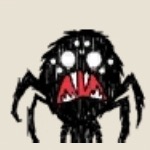
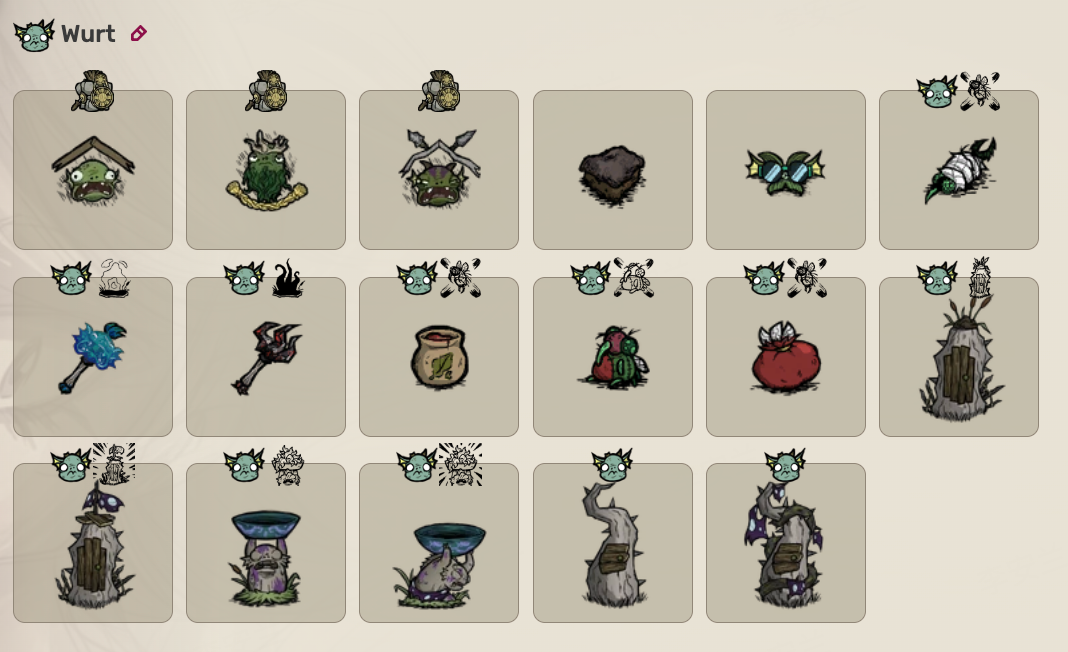
Wurt's headline ability is her exclusive structures. She can build Craftsmerm Houses to spawn ordinary Merms and Merm Flort-ifications to house tougher Merm Guards, then recruit them as followers by feeding them vegetarian food or fish. Loyal Merms will fight for her, chop trees and mine boulders, turning a lone survivor into a commander with a green labour force.

She can also hand non-Merm teammates a Clever Disguise so the swamp's creatures treat them as friendly too, letting an entire party benefit from her followers.

The King of the Merms

Wurt's late-game centrepiece is the Royal Tapestry, which lets her crown a Merm as the King of the Merms. While the King lives, the payoff is enormous: every Merm and Merm Guard gains a large boost to health and damage, the whole faction becomes neutral to all other players and creatures, and Wurt herself jumps to substantially higher health, hunger and sanity caps than almost any survivor.

The King is also a trading partner. Much as other survivors trade with the Pig King, Wurt (or a disguised ally) can feed the Merm King fish in exchange for kelp, seeds, reeds, trinkets, and even gold from ocean fish — partly making up for being cut off from the Pig King. The catch is upkeep: the King has his own hunger and will starve and die if neglected, so a Merm kingdom is a commitment, not a one-time build.

Build for your goal: if you intend to keep a fed King, lean on Flort-ifications and powerful Merm Guards; if you don't, simpler Craftsmerm Houses are the better investment. A starving, dead King takes his army's buffs with him.

Reading, books and sanity

Wurt has a lower sanity pool than a standard survivor, so managing her mind matters. She can pick up Wickerbottom's books and read them — not to trigger their magical effect, but simply to gain or lose sanity depending on the book, giving her a handy way to top up. Keeping a living fish in her inventory also slowly restores her sanity, rewarding her natural affinity for the water.

Downsides and drawbacks

Wurt's vegetarianism is a real planning burden, especially in early winter before farms are productive, and the pig feud denies her one of the game's best early economies. Her followers and King need feeding and tending, so her power is back-loaded: a Wurt who has not yet built her settlement is a fragile, low-sanity survivor with a restrictive diet.

Like the other unlockable survivors she has to be unlocked, and her ceiling rewards patience rather than aggression. She is a project character — magnificent once established, slow to get there.

How to play Wurt

Early on, settle near or in a marsh, secure a vegetable food supply, and prototype her structures at a science machine. Recruit a few Merms to speed up chopping and mining, and keep a living fish on you for the sanity trickle.

Mid game, expand the settlement, decide whether you are committing to a King, and start building the Merm population that will eventually fight for you. Hand allies Clever Disguises so the whole team can live in the swamp safely.

Late game, a fed Merm King plus a wall of buffed Merm Guards makes Wurt a powerhouse: her army can help bring down major bosses such as the Bee Queen, and her own inflated stats make her surprisingly tanky for a character who started as a fragile swamp child.

Lore, connections and personality

Wurt's charm comes from her sincerity. She is a child with a national project — the restoration of Merm-kind — and she pursues it with a wide-eyed earnestness that the grim swamp does nothing to dampen. Her fascination with the wider world (and with the survivors' stories and books) makes her feel like a hopeful outsider trying to translate between two hostile cultures: the marsh and everyone else.

That theme runs straight through her mechanics. She does not fight the swamp; she leads it. She does not hoard power; she crowns a king and shares the buffs with her people. Even her bitter feud with pigs reads as cultural rather than personal — an old animosity she inherited rather than chose. Few survivors express their personality through their kit as cleanly as Wurt.

Trivia and references

Small details round out her character.

  • Her existence leaked early, in October 2019, when a cosmetic item for her turned up in a Klei developer's public Steam inventory.
  • Her voice is built from a sawtooth tone mixed with the sound of gargling, giving her a wet, burbling delivery.
  • She refers to creatures in her own vocabulary — calling Merms "mermfolk" and clockwork robots "ironfolk".
  • Her horns are a sign that she is specifically a Merm Guard, not an ordinary Merm.
  • Her birthday is listed as October 17 in the Compendium.

Starting kit and stats

Wurt starts with a lower sanity pool than a standard survivor and, before her Merm King, a fairly ordinary health bar — but a crowned, well-fed King pushes her into some of the highest health, hunger and sanity caps in the game. That swing from fragile to formidable is the shape of her whole progression.

She also begins able to craft her swamp structures once she has a science machine, so her opening priority is settling near a marsh, locking down a vegetable food supply, and recruiting her first few Merms to speed up the grind.

Common mistakes to avoid

The biggest Wurt mistake is crowning a Merm King and then letting it starve. A dead King takes every buff — your inflated stats and your army's bonus health and damage — with him, so if you are not prepared to keep him fed, you are often better off without one. Always keep a stock of vegetarian food earmarked for the King.

Other common errors include forgetting to hand allies a Clever Disguise (leaving them under attack in your own swamp base), and fighting pigs needlessly — her feud with them is permanent, so plan your map around it rather than trying to befriend a pig village you can never use.

Release and updates

Wurt was released on October 24, 2019 as an unlockable survivor, obtainable through her chest, a starter pack, or by weaving her with spools. Later updates gave her a skill tree that expanded her command over Merms — including mutated Merms and upgrades channelled through the King — deepening the faction-leader fantasy at the heart of her design.

The Pinetree Pioneer

Walter

Walter is a fearless boy scout armed with a trusty slingshot and an invincible dog named Woby. He shrugs off the darkness and the horrors that terrify everyone else — right up until something actually hurts him, at which point his bravado cracks and his sanity starts to bleed.

Who Walter is

Walter is a ranged, exploration-focused survivor with a unique relationship to sanity. His gimmick is a clever inversion of the usual rules: most survivors lose their minds in the dark and around monsters, but Walter is simply not afraid of any of that. What rattles him is pain. Take damage and his fearless facade shatters, draining sanity in proportion to how hurt he is.

That single twist makes him play completely differently from the rest of the cast. Where others manage sanity by avoiding scary things, Walter manages it by avoiding getting hit — which is exactly why he fights at range and travels on a fast, invincible mount.

Origin: a scout and his dog

Walter is a stout-hearted "Pinetree Pioneer" — a boy scout whose love of the outdoors is matched only by his fascination with monsters, cryptids and spooky stories heard over the radio. That curiosity is what landed him in the Constant, and his origin is shown in the animated short "Constant Companion".

Lost and alone in an impossible world, he was not alone for long: he befriended a scruffy, mysterious dog named Woby and vowed to one day return her to her rightful home — because returning a lost dog is, of course, the proper Pinetree Pioneer thing to do. The two are inseparable, and Woby is as central to his kit as any of his gear.

Fearless — until it hurts

Walter ignores negative sanity auras entirely. Darkness, dusk, the presence of giants and monsters, nightmare creatures — none of it drains his mind the way it would anyone else's. He can camp in the dark and stand beside horrors without flinching, which makes him an outstanding explorer and night-worker.

The price is his reaction to harm. Whenever Walter loses health he loses sanity too, and he keeps bleeding sanity steadily for as long as his health bar sits below full. In effect his courage is real but brittle: a healthy Walter is unshakeable, while a wounded Walter spirals. His special Pinetree Pioneer Hat softens this, halving the sanity lost from taking damage, and standing near trees also slows the drain.

Stay topped up: Walter's sanity problems are really health problems in disguise. Heal promptly, fight at range, and a fully-patched Walter barely has a sanity bar to worry about.

The Trusty Slingshot

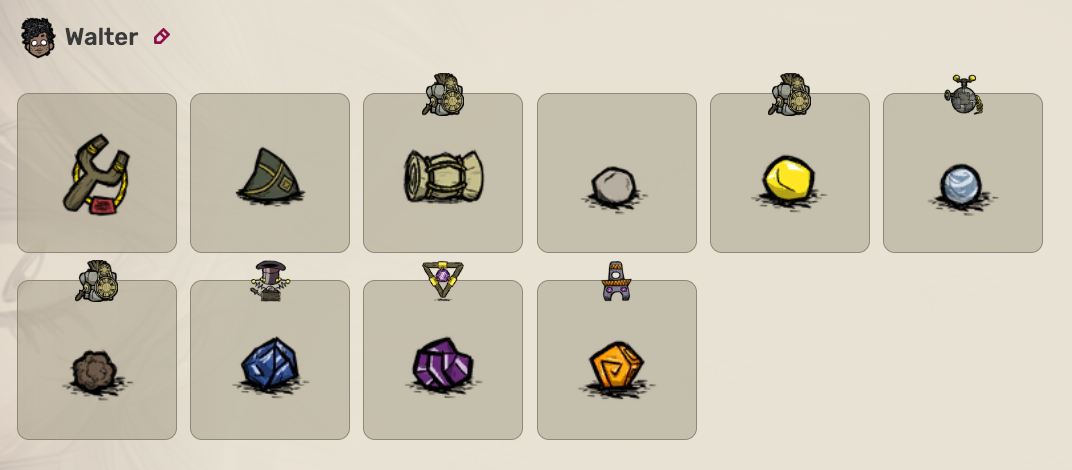
Walter starts every world with a slingshot, one of the very few ranged weapons available from the first minute of the game. Its basic pebble ammo is weak, but the slingshot's real value is twofold: it lets him deal damage from a safe distance — which is everything for a character punished by taking hits — and it can fire a whole range of specialised ammunition he can craft.

Different rounds freeze targets, slow them down, distract them into ignoring him, or even summon shadow tentacles, turning the slingshot into a versatile control tool rather than just a pea-shooter. Crucially, his shots will not draw a monster's attention if it is already busy fighting something else, letting him safely pour damage into a boss that a tankier ally is holding.

Woby, the invincible companion

Woby is Walter's ever-present dog, and she is genuinely invincible — monsters never target her and she cannot die. In her small form she follows Walter as a portable storage container, much like Chester, giving him generous early inventory space.

Feed her enough monster food and Woby grows into a large form that Walter can ride like a beefalo, with no saddle required. Big Woby is a fast mount that also provides serious winter insulation and her own bag of inventory slots. The one rule of mounted combat is strict: Walter can only attack with his slingshot while riding, and if Woby takes a hit she will buck him off and bolt — so she is a tool for kiting and travel, not for tanking. Because Walter already has Woby, he cannot adopt a separate critter pet.

Camp stories and self-sufficiency

True to his scouting theme, Walter can tell campfire stories at night that restore sanity to the whole group sitting around the fire — a rare team-wide sanity source. Combined with his fast cooking, his ability to camp efficiently, and Woby's storage and mobility, he is one of the most self-sufficient survivors for long expeditions away from base.

Downsides and drawbacks

Walter's defining weakness is that any sustained damage quickly becomes a sanity problem, which can snowball in tough fights if he is not healing. He is also allergic to bees: every bee-type enemy, including the Bee Queen, deals extra piercing damage to him that armour cannot reduce, making certain encounters disproportionately dangerous.

On top of that, ordinary sanity-restoring clothing simply does not work on him — the calming effect of a top hat or similar items is wasted — so he must lean on his own tools (staying unhurt, the Pinetree Pioneer Hat, trees, campfire stories) to keep his mind intact. Mishandled, he is fragile; handled well, he barely notices the dark at all.

How to play Walter

Play at range and stay healthy. Use the slingshot as your main weapon, craft better ammo as soon as you can, and treat every hit you take as a sanity cost to be avoided. Keep the Pinetree Pioneer Hat handy for when you do get hurt.

Lean on Woby for travel and hauling: ride Big Woby to cross the map quickly and to explore the dark caves and ruins that would terrify other survivors, and use her storage to carry loot home. Be extremely cautious around bees and the Bee Queen, where his allergy can get him killed.

In a group, Walter is a superb ranged damage dealer and scout who can safely chip at bosses an ally is tanking, while his campfire stories quietly keep the team sane.

Lore, connections and personality

Walter is the rare survivor whose defining trait is optimism. He is a scout who genuinely loves the outdoors and is thrilled, not terrified, to find himself surrounded by real monsters and cryptids — the very things he used to chase through spooky radio stories. His courage is not a pose; it is the honest fearlessness of a kid who has not yet learned to be afraid of the dark.

That is exactly why pain, not darkness, is his weakness. His bravado is real but untested, so the first time the world actually hurts him, the illusion cracks. His bond with Woby completes the picture: a lost boy and a lost dog looking out for each other, his promise to get her home giving his whole survival a gentle, hopeful purpose that most of the cast lacks.

Trivia and references

A few notes on the fearless pioneer.

  • His voice is performed to sound like an out-of-tune bugle or a blade-of-grass whistle, fitting his scout theme.
  • When he eats certain rich foods he breaks into a song whose melody is borrowed from the campfire classic about "greasy, grimy gopher guts".
  • He was briefly able to ignore the sanity drain of shadow weapons like the Dark Sword, but this was removed — his courage was never meant to beat actual shadow magic.
  • He and Woby were designed not to know any of the other survivors beforehand; their bond began in the Constant.

Starting kit and stats

Walter spawns with a modest health pool, lower hunger, and a healthy sanity bar, alongside his signature gear: a Trusty Slingshot, a Pinetree Pioneer Hat and a small supply of pebble ammo, with Woby at his side from the very first second. That ranged weapon from minute one is a real head start few survivors get.

His low starting hunger and his sanity-from-damage rule mean his early game is about staying fed and unhurt while he gathers materials for better slingshot ammunition.

Common mistakes to avoid

The defining Walter mistake is tanking hits. Because damage converts straight into sanity loss, wading into melee melts his mind; he should be firing from range and treating every hit as a double cost. Equip the Pinetree Pioneer Hat when wounded to soften the spiral.

The second trap is bees. His allergy means a careless approach to a bee box or the Bee Queen can kill him shockingly fast, since the bonus damage ignores armour — approach all bee content with extreme caution. Lastly, do not rely on calming clothing to manage his sanity; those items simply do not work on him, so lean on staying healthy, trees, his hat and campfire stories instead.

Release and updates

Walter was released on June 15, 2020 as a free survivor for all players — only the third free character at the time, after Wilson's original cast and Winona. He later received a skill tree that expands his slingshot ammunition, his camping kit and Woby's abilities, reinforcing his identity as a ranged explorer with a very good dog.

The Clockmaker

Wanda

Wanda is a clockmaker on the run from her own future, with no health bar at all — only an age that constantly ticks upward. She bends time with a set of pocket watches that let her heal, teleport, revive the dead and strike with shadow-charged blows, trading youth for power and back again.

Who Wanda is

Wanda is the most mechanically unusual survivor in Don't Starve Together. She has no conventional health meter; instead she has an Age, and managing that number is the entire character. Everything she does revolves around a personal crafting tab of time-bending watches, making her a high-skill survivor with one of the highest damage ceilings in the game and a uniquely flexible support kit.

Thematically she is always in a hurry, always glancing over her shoulder at something catching up with her. That tension between racing forward and being dragged back is baked directly into how she plays.

Origin: tangled in the timestream

Wanda is a skilled clockmaker who has spent longer than she can remember trying to outrun her own future. Her backstory is told in the animated short "Long Shadows": a split-second decision left her tangled in the Constant's broken timestream, tearing her out of her own era and into the nightmare world — and now it may be her past, not her future, that is finally catching up.

She is cagey about her history, yet oddly familiar with the other survivors, as if she has met them before — or will meet them later. Her dialogue paints her as a Victorian-era figure who struck some kind of bargain with a mysterious entity in exchange for the shadow magic that powers her time travel, a deal that clearly did not come free.

Age instead of health

Wanda does not take damage the way other survivors do. She has an Age meter that runs from 20 to 80; she begins a world at 38 and grows steadily older on her own, ageing about a dozen years over a single in-game day. When she is hit, instead of losing health she ages by a fraction of the damage. If she ever reaches 80, she is claimed by shadow hands and dies outright.

Because her ageing from damage is applied gradually rather than instantly, a skilled Wanda can survive a blow that should have been fatal by healing in the split second before it fully lands. The flip side is that she cannot heal by ordinary means at all — bandages, salves and food do nothing for her age. Only one of her own watches can turn back the clock.

Carry spare clocks: since an Ageless Watch is Wanda's only healing, experienced players keep several on hand so a bad moment never leaves them without a way to wind back the years.

Young, middle-aged and elderly

Wanda's age is not just a health bar with a different name — it actively rewrites her abilities. She moves through three life stages, each with trade-offs. Young Wanda is sturdier and her teleport reaches furthest, but she is weaker in a fight. Elderly Wanda is fragile and ages dangerously close to death, but she hits hardest, especially with shadow magic and her age-scaling weapon.

This means a Wanda player is constantly deciding how old to be: stay young and safe while exploring, or deliberately age into a glass-cannon for a boss fight, then wind back to safety afterward. No other survivor turns their own health bar into a damage dial like this.

The Clocksmithy: her pocket watches

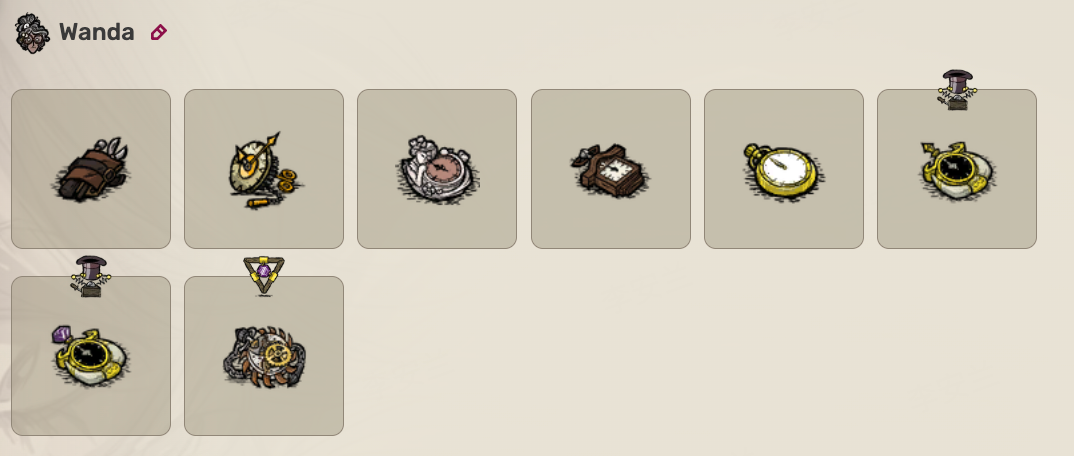
Wanda's exclusive crafting tab lets her build a set of watches and tools that define her kit. Each one manipulates time in a different way:

  • Ageless Watch — her only source of healing, winding her age backward to restore her effective health.
  • Backstep Watch — a short teleport that grants a generous window of invincibility, making it a superb dodge for boss attacks and a panic button against the dark.
  • Alarming Clock — a weapon whose damage scales with her age, becoming devastating in her elderly stage and the basis of her huge damage ceiling.
  • Second Chance Watch — lets her cheat death and return, a personal self-revive.
  • plus tools for crafting and converting the Time Pieces that fuel the whole system.

Cleverly, her watches do not drop when she dies — they are part of her outfit — so she rarely loses her kit, and her time pieces can be partly replenished through respawn mechanics, easing their otherwise steep cost.

A surprising support role

Beyond her own combat, Wanda has a quietly excellent team utility: because she has an age meter rather than a normal health bar, she suffers no maximum-health penalty from dying and being revived. That makes her the ideal candidate to be revived with a Telltale Heart, handing the reviver a large burst of sanity with none of the usual downside — a repeatable trick for keeping a team sane.

Downsides and drawbacks

Wanda is demanding and resource-hungry. Her watches cost Time Pieces, which take materials and gems to produce, so a poorly-supplied Wanda runs out of healing and mobility at the worst times. Her constant ageing means she can never fully relax — even standing still, the clock is ticking toward 80.

She is also unforgiving for newcomers. The interplay of age, gradual damage, the three life stages and a whole tab of watches is a lot to juggle, and a misplayed Wanda dies suddenly and permanently. The reward for mastering all of it is a survivor who can out-damage almost anyone and dodge attacks other characters simply have to tank.

How to play Wanda

Treat your age like a precious health pool: keep Ageless Watches stocked, and never let a fight push you toward 80 without a way to wind back. Use the Backstep Watch constantly — both to dodge boss swings during its invincibility window and to escape danger, including the killing dark.

Pick your age for the situation. Explore and travel while young for the longer teleport and extra safety; age up before a boss to unleash the Alarming Clock and your boosted shadow damage, then heal back down. Keep your Time Piece economy healthy so you always have clocks to spare.

In a team, she is a top-tier boss-killer and a renewable sanity battery via Telltale Heart revives, but she asks the group to keep her supplied with gems and materials for her watches.

Lore, connections and personality

Wanda is built around a single haunting idea: a person running from time itself. Everything about her — the ticking age meter, the watches, the constant hurry in her dialogue — expresses someone who made a bargain with the dark to outrun a future she fears, only to be flung loose in the Constant's broken timestream. Her odd familiarity with the other survivors suggests she has looped through these events before, perhaps many times.

It makes her quietly tragic. She cannot be healed the ordinary way because, thematically, what she needs is not medicine but time — and time is the one thing always running out. Yet she is also defiant, insisting that a clever enough person can outsmart any curse. That blend of dread and bravado, expressed entirely through clockwork, makes her one of the most thematically tight designs in the game.

Trivia and references

Details that flesh out the timekeeper.

  • She is voiced by grandfather-clock chimes; when she grows old, her voice gains a distorted, wavering vibrato.
  • Her watches stay with her on death because they are attached to her outfit rather than being ordinary inventory items.
  • Her dialogue and skin strongly suggest a Victorian-era origin, peppered with old-fashioned words and skepticism toward "newfangled" early electric lighting.
  • She is the only DLC (unlockable) survivor in the game who is an ordinary human rather than a monster or construct.

Starting kit and stats

Wanda is the one survivor with no health bar at all — her Age stands in for it — and she begins a world at 38 years old holding an Ageless Watch and a few Time Pieces, the seeds of her entire Clocksmithy. Her effective durability sits a little below an average survivor's, so positioning and dodging matter more for her than for most.

Her first task in any world is securing the materials and gems that feed Time Pieces, because without them she has neither healing nor her best tools.

Common mistakes to avoid

The fatal Wanda mistake is running out of Ageless Watches. Since they are her only healing, a single watch and a long fight can end in permanent death; carry spares. Watch out, too, for the watch's short use animation, which a hostile hit can interrupt — create space before you try to heal.

Newer players also mismanage their age, sitting elderly while merely exploring (fragile for no reason) or staying young into a boss fight (giving up huge damage). Match your age to the task. And do not neglect the Time Piece economy: a Wanda with no clocks to craft is a Wanda with no kit at all.

Release and updates

Wanda was released on September 9, 2021 as an unlockable survivor, available by weaving with spools or purchasing her chest. Klei Ambassadors received early access a couple of days before launch. Later updates added her skill tree, expanding her clock arsenal and refining the age-as-power fantasy that makes her one of the most distinctive characters in Don't Starve Together.

The Cursed Monkey

Wonkey

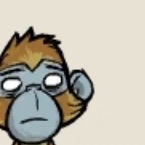
Wonkey is not a survivor you choose — it is a curse you fall into. Collect too many Accursed Trinkets from the pirate monkeys of Moon Quay and any character transforms into Wonkey, a stripped-down monkey form that trades all of their special abilities for speed, faction quirks, and a problem to solve.

Who — or what — Wonkey is

Wonkey is unique in the entire cast: it is not a character anyone unlocks or selects, but a state that any survivor can be forced into and later reverse. When a player accumulates enough Accursed Trinkets, their chosen survivor is overwritten by Wonkey, a cursed monkey with none of that survivor's perks. Get rid of the trinkets and the curse lifts, returning the original character.

That makes Wonkey less of a hero and more of a mechanic dressed up as a character — a hazard tied to the pirate-monkey content of the Moon Quay island, and a small gamble players can choose to take or scramble to undo.

Origin: the curse of Moon Quay

Wonkey comes from the seafaring corner of the game. Out on the ocean lies Moon Quay, an island inhabited by thieving Powder Monkeys and ruled by the Queen of Moon Quay. Killing those Powder Monkeys causes Accursed Trinkets to latch onto you automatically, and they cannot be dropped or stashed away — each one simply eats an inventory slot and clings to you.

As the trinkets pile up, the survivor visibly begins to turn simian, and once they reach ten trinkets the transformation completes: the curse takes hold and the player becomes Wonkey. The lore frames it as an old curse tied to the monkeys' kingdom, a fittingly piratical bit of bad luck for anyone who plunders the wrong island.

What the curse takes away

Becoming Wonkey strips the player down to basics. All of the original character's special abilities, exclusive crafting recipes and damage modifiers are switched off, and Wonkey's raw stats are modest — among the lowest in the game. A Wanda loses her watches, a Wortox loses his souls, a Winona loses her engineering tab; for as long as the curse holds, none of that exists.

There is one wry consolation: because the curse also removes the original character's downsides, it can enable interactions that would normally be impossible for that survivor, which is part of why some players treat the transformation as a tool rather than purely a punishment.

What the curse gives

Wonkey is not all loss. Its signature trait is movement: Wonkey's standing speed is actually a little slower than normal, but after running for a few seconds it accelerates to a sprint faster than an ordinary survivor. The trade is hunger — that sprint burns food noticeably faster — but over a long journey Wonkey covers the same ground for the same hunger while arriving sooner, making the curse a surprisingly good travel form.

Wonkey also shifts the player's standing with the world's factions. The pirate monkeys of Moon Quay and their Queen become friendly and even understandable, while pigs and bunnymen turn hostile and the speech of most other creatures dissolves into gibberish. The curse, in other words, swaps which side of the map's politics you belong to.

A curse you can weaponise: experienced players sometimes hover just below the transformation, or embrace Wonkey deliberately, using the speed and monkey-faction neutrality on purpose before curing themselves later.

Lifting the curse

Reverting from Wonkey means removing every last Accursed Trinket. The intended cure is the Queen of Moon Quay herself: bring her bananas, and for each banana she strips several trinkets away. Clear them all and the original survivor returns, abilities intact.

There are messier escape routes too — dying causes the trinkets to drop, for instance — but the banana-trading loop with the Queen is the clean, intended path back to normal. Because the trinkets re-attach if you are not careful, undoing the curse is a deliberate little errand rather than a one-button fix.

How Wonkey fits into a run

For most players Wonkey is an occasional, situational state rather than a main character. You meet it by sailing out to engage the Moon Quay content, and you deal with it on the way back. Treated carelessly it is a nuisance that robs you of your survivor at an awkward time; treated cleverly it is a fast, faction-flipping travel mode you can dip into and out of.

Either way it is one of the most creative ideas in the game's roster: a "character" that is really a reversible consequence, woven directly into the pirate-and-monkey theme of the ocean update that introduced it.

Downsides and drawbacks

As a deliberate curse, Wonkey is mostly downside by design: low stats, no special kit, faster hunger drain while sprinting, hostility from pigs and bunnymen, and the loss of communication with most of the world. The Accursed Trinkets that cause it also clog your inventory and refuse to be dropped, so even the path into the curse is a small tax on your bag space.

It is best understood not as a survivor to optimise but as a risk to understand — something to avoid stumbling into, or to enter on purpose with a clear plan to cure it.

Lore, connections and personality

Wonkey has no backstory in the usual sense because it is not really a person — it is what is left when the curse of Moon Quay overwrites someone else. That absence is the point. Where every other survivor is defined by who they are and what they can do, Wonkey is defined by what has been taken away, a hollow monkey shape wearing whatever character you used to be.

Its personality, such as it is, belongs to the pirate-monkey world it comes from: thieving, chattering Powder Monkeys and their slumbering Queen. Becoming Wonkey briefly enrolls you in that society — you understand the monkeys, they tolerate you — while the human world's pigs and rabbits turn their backs. It is less a character arc than a folk-tale warning: take too much cursed gold, and you become one of the monkeys yourself.

Trivia and references

Notes on the game's strangest "character".

  • Wonkey does not appear in the Curio Cabinet roster like every other survivor; it only shows up once a player has transformed for the first time.
  • It is voiced by the cuíca, a Brazilian friction drum often nicknamed a "monkey drum" because its squeaks resemble monkey calls.
  • It was introduced alongside the Powder Monkeys and the Queen of Moon Quay in the ocean content that added the island.
  • A leftover comment in the game's code muses about whether Wonkey might one day get its own cosmetic skins.

Starting kit and stats

Because Wonkey is a curse rather than a chosen survivor, it has no starting kit of its own — you arrive as it only by accumulating ten Accursed Trinkets while playing some other character. Its stat pools are deliberately low, sitting near the bottom of the roster, which underlines that the transformation is meant as a setback rather than an upgrade.

Whatever gear you were carrying stays with you, but every character-specific item, recipe and ability switches off for the duration, so the practical "kit" of Wonkey is just its legs, its fists, and whatever generic tools you happened to be holding.

Common mistakes to avoid

The most common Wonkey mistake is stumbling into the curse by accident: players farm Powder Monkeys for loot without realising the Accursed Trinkets are stacking up, and suddenly lose their main character at an inconvenient moment. If you are not ready to become Wonkey, watch your trinket count and cure early.

The second is returning to a pig or rabbit settlement while cursed — those former allies are now hostile and will swarm you. And because trinkets cannot be stored away, players sometimes forget they are clogging inventory slots the whole time; factor that lost space into any plan before you go monkey-hunting.

Where Wonkey fits among the cast

Wonkey is best understood by contrast with the other survivors. Every one of them is a kit you build toward; Wonkey is a kit you temporarily lose. That makes it the only "character" defined by absence rather than ability, and the only one tied to a specific piece of world content — the pirate monkeys and the Queen of Moon Quay — rather than to a backstory and a crafting tab.

For that reason most players never main Wonkey; they experience it as a hazard of the high seas, a reversible consequence woven into the ocean update. Understanding it is really about understanding Moon Quay: where the trinkets come from, what they do to you, and the banana-trade loop that sets you free again.

Release and updates

Wonkey arrived with The Curse of Moon Quay update, the seafaring content that added Moon Quay island, its pirate Powder Monkeys, the Queen of Moon Quay and the Accursed Trinket system. Rather than being sold or woven like the other DLC survivors, Wonkey exists purely as the payoff of that curse mechanic — a one-of-a-kind addition to the cast that any player can experience simply by sailing into the wrong island's trouble.

One world, many survivors

That's the DST-original roster. Now see the systems they all have to master.

Explore the features